

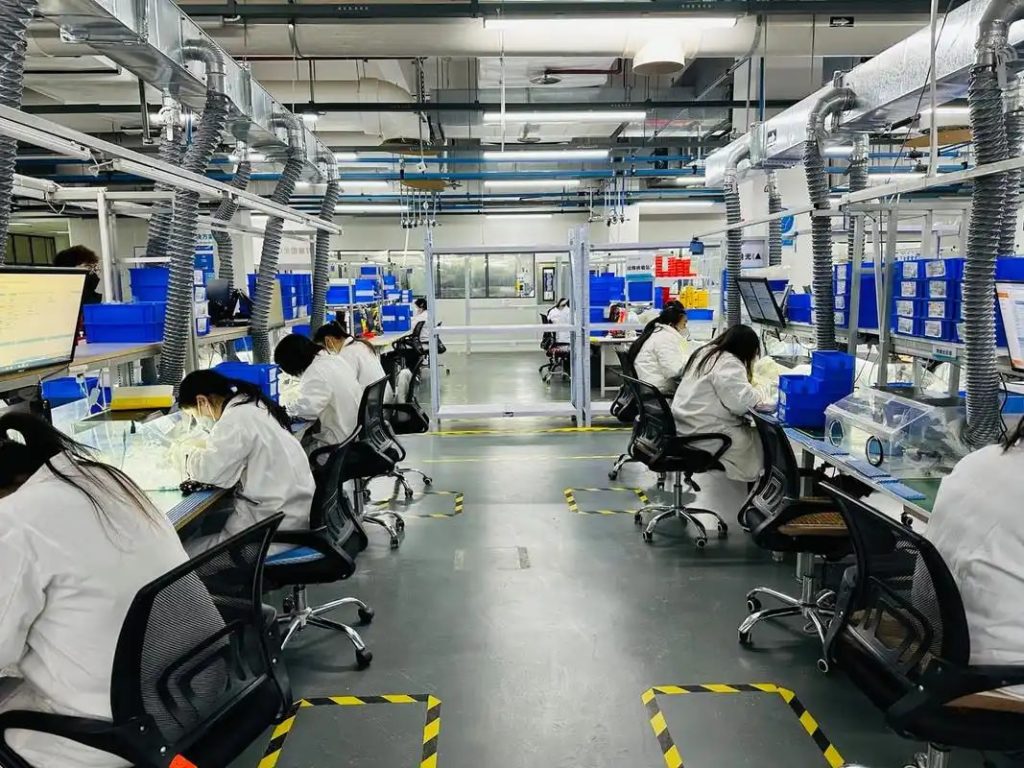
The Changing Landscape of Dental Laboratory Services
The dental laboratory industry is undergoing unprecedented transformation. Over the past five years, small boutique labs have gradually disappeared from the competitive landscape, replaced by large corporate mega-labs that dominate regional markets. Simultaneously, the industry faces a critical shortage of skilled technicians who can seamlessly blend traditional hand-instrument artistry with modern digital CAD/CAM technology. For practicing dental technicians and lab managers, understanding these market forces is essential to positioning your laboratory for long-term success.
Understanding Industry Consolidation: The Mega-Lab Effect
Corporate consolidation is reshaping how dentists source prosthetic services. Large, well-capitalized mega-labs are systematically acquiring smaller, local boutique laboratories. This trend raises fundamental questions for technicians: Where does my skillset fit in this new hierarchy? How can I demonstrate value in an era of automation?
Key impacts on your career:
- Career Path Uncertainty: Consolidation creates ambiguity about specialization value. Technicians who built their expertise in crown and bridge or partial denture design must now compete with automated systems capable of processing hundreds of cases daily.
- Market Value Pressure: Your hourly labor cost becomes a metric compared to machine throughput. The argument ‘automation can’t match hand artistry’ must be backed by measurable quality improvements or aesthetic outcomes that justify premium pricing.
- Standardization Demands: Mega-labs operate standardized processes across multiple production centers. Custom requests or trial-and-error approaches that once differentiated small labs are now viewed as inefficiencies.
The Skilled Labor Gap: The Dual-Competency Challenge
The most acute problem facing the dental laboratory industry today is not lack of labor—it’s lack of properly trained labor. The ideal 21st-century dental technician must master two seemingly contradictory skillsets:
- Classical Hand-Instrument Artistry: The ability to hand-craft denture bases, manually wax crowns, cast alloys, and understand the nuanced adjustments required for optimal fit and function.
- Digital CAD/CAM Proficiency: The ability to operate desktop lab scanner, use CAD design software, program milling machines, manage 3D printer workflows, and troubleshoot digital files.
Finding technicians who excel at both is extraordinarily difficult. Most practitioners trained in traditional methods struggle with digital tools, while younger technicians attracted to the technology often lack the foundational hand-crafting skills that produce superior clinical outcomes.
Dental Lab Industry Consolidation Trends
| Market Factor | Traditional Boutique Labs (2015) | Corporate Mega-Labs (2024) |
| Scale | 10-30 employees, regional coverage | 200+ employees, multi-state presence |
| Technology Focus | Manual hand-crafting with selective CAD/CAM | Heavily automated, digital-first workflows |
| Price Competition | Premium pricing for specialty cases | Race-to-bottom pricing, high volume |
| Skill Requirements | Deep expertise in specific case types | Standardized processes, CAD/CAM operation |
| Market Position | Largely consolidated or closed | Dominant, growing, acquisition-driven |
Balancing Manual Artistry and Digital Efficiency
The core strategic question your laboratory must address is this: Should we operate as a pure-digital facility, maintain traditional manual capabilities, or embrace a hybrid model? Each approach carries distinct advantages, cost implications, and staffing requirements.
Consider your patient demographics and clinical needs. If your referral base includes high-aesthetic cosmetic cases, aging patients requiring intricate denture adjustments, or complex partial denture designs, manual capabilities remain valuable. If your volume consists primarily of standardized implant crowns and full-arch bridge work, digital automation will dominate.
Suppliers like Dentsma recognize this hybrid reality and provide comprehensive equipment options across the spectrum. Dentsma’s product catalog spans from traditional burnout ovens and centrifugal casting machines to advanced 5-axis milling systems and high-definition 3D printers, allowing laboratories to configure their production environment according to their operational strategy.
Manual Hand Artistry vs. Digital Workflow Comparison
| Workflow Element | Manual Hand Artistry | Digital CAD/CAM Workflow |
| Foundation | Manual impression pouring, vibrators | Intraoral/optical scanning |
| Design Phase | Hand-waxing, articulators, surveyors | CAD software, digital design tools |
| Material Processing | Burnout ovens, centrifugal/induction casting | 5-Axis milling, 3D printing |
| Finishing | Benchtop lathes, hand polishing, detail work | Sintering furnaces, minimal post-processing |
| Turnaround | 5-10 business days (variable) | 2-5 business days (consistent) |
| Cost Structure | High labor, lower capital investment | High capital, lower labor-per-case |
Strategic Business Considerations: Lab Layout, Equipment, and Staffing
Successfully positioning your laboratory requires deliberate choices about physical layout, equipment investment, and talent development. These decisions should align with your chosen workflow model.
- Laboratory Layout Design: Manual workflows require distinct workstations for impression pouring, articulation, waxing, casting, and finishing. Digital workflows demand server infrastructure, CAD workstations, and specialized equipment rooms for scanning and milling. Hybrid labs require thoughtful zoning to prevent workflow bottlenecks.
- Equipment Prioritization: Start with the equipment that matches your highest-volume case types. If 70% of your work is traditional dentures, invest first in quality flasks, articulating equipment, and finishing lathes. If 70% is implant crowns, prioritize a reliable milling machine.
- Staffing and Training: The labor gap will not resolve itself. Commit to ongoing training programs. Hire younger technicians who understand digital processes and pair them with experienced craftspeople who can teach manual techniques. This intergenerational knowledge transfer is critical.
- Quality Control Protocols: Whether your work is predominantly manual or digital, implement rigorous quality checks. Digital efficiency gains are meaningless if cases fail at chairside. Manual excellence is wasted if turnover timelines are uncompetitive.
Strategic Recommendations for 2026 and Beyond
- Specialize, don’t generalize. Mega-labs compete on volume and cost. You compete on quality and specialization. Double down on case types where your expertise creates demonstrable value.
- Invest in hybrid capabilities. The future belongs to labs that can toggle between manual and digital workflows based on clinical need, not those locked into a single approach.
- Build a training culture. Your greatest competitive advantage is a team that blends experience with innovation. Invest in continuous education.
- Partner with equipment suppliers strategically. Suppliers like Dentsma who understand your transition challenges can become partners in your growth. Their comprehensive product lines allow you to scale capabilities methodically.
Conclusion: The Path Forward
Consolidation and digital disruption are reshaping dental laboratory economics. The technicians and laboratories that thrive will be those who acknowledge these realities while doubling down on quality, specialization, and continuous skill development. Your market value is not determined by what mega-labs can automate—it’s determined by what you do better than alternatives. In a consolidating industry, that differentiation has never been more important.


